Earthing plays a critical role in electrical safety by providing a safe path for fault currents to dissipate into the ground. Choosing the right earthing material is essential to ensure system reliability, protect equipment, and safeguard human life. Among the most commonly used earthing materials are Galvanized Iron (GI), Cast Iron (CI), and Copper.
At Aparna Rollform, we manufacture and supply high-quality earthing and grounding materials designed to meet industry standards and diverse application needs. Understanding the differences between GI, CI, and Copper earthing materials helps engineers and contractors select the most suitable solution for their projects.
Understanding Earthing Materials
Earthing materials form the core of an effective grounding system. They are used to safely discharge electrical faults, lightning surges, and leakage currents into the earth. The choice of material depends on factors such as soil resistivity, environmental conditions, installation type, and budget.
GI Earthing Materials: Features & Applications
What Is GI Earthing?
GI earthing uses galvanized iron electrodes, pipes, plates, or strips coated with zinc to resist corrosion. These are widely used due to their durability and cost-effectiveness.
Advantages of GI Earthing
- Good corrosion resistance due to galvanization
- High mechanical strength
- Suitable for varied soil conditions
- Cost-effective for large installations
Common Applications
- Residential and commercial buildings
- Industrial plants
- Power distribution systems
- Electrical panels and equipment earthing
GI earthing is ideal where moderate conductivity and long service life are required at an economical cost.
CI Earthing Materials: Features & Applications
What Is CI Earthing?
CI earthing involves cast iron pipe or plate electrodes known for their robustness and ability to withstand mechanical stress. These are traditionally used in heavy-duty installations.
Advantages of CI Earthing
- Excellent mechanical strength
- Long lifespan in stable soil conditions
- Suitable for high fault current handling
Common Applications
- Heavy industrial installations
- Substations
- Power plants
- Large machinery earthing
While CI earthing offers durability, it may require more maintenance in corrosive soil environments compared to GI and copper.
Copper Earthing Materials: Features & Applications
What Is Copper Earthing?
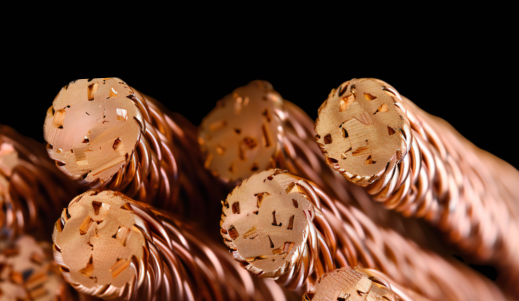
Copper earthing uses pure copper or copper-bonded electrodes, known for their superior electrical conductivity and corrosion resistance.
Advantages of Copper Earthing
- Excellent conductivity ensures low earth resistance
- Highly corrosion-resistant
- Long service life with minimal maintenance
- Reliable performance in varied soil conditions
Common Applications
- Data centers and IT infrastructure
- Hospitals and laboratories
- Telecom installations
- Lightning protection systems
Copper earthing is preferred where precision, safety, and performance are critical.
Key Differences Between GI, CI, and Copper Earthing Materials
Parameter | GI Earthing | CI Earthing | Copper Earthing |
Conductivity | Moderate | Moderate | Excellent |
Corrosion Resistance | Good | Moderate | Excellent |
Mechanical Strength | High | Very High | Moderate |
Maintenance | Low | Moderate | Very Low |
Cost | Economical | Moderate | Higher |
Lifespan | Long | Long | Very Long |
Choosing the Right Earthing Material
Selecting the appropriate earthing material depends on:
- Soil resistivity and moisture content
- Environmental conditions
- Fault current levels
- Budget constraints
- Application sensitivity
For most general applications, GI earthing offers an ideal balance of performance and cost. CI earthing suits heavy-duty industrial needs, while copper earthing is best for sensitive and high-performance electrical systems.
Aparna Rollform’s Earthing & Grounding Solutions
Aparna Rollform offers a comprehensive range of earthing and grounding materials, including:
- GI pipes, plates, and strips
- CI pipe electrodes
- Copper plates and copper strips
- Test link boxes
- Lightning arrestors
Manufactured with strict quality control, our earthing solutions ensure reliability, safety, and compliance with industry standards.
Conclusion
GI, CI, and Copper earthing materials each serve distinct purposes in electrical grounding systems. While GI and CI provide strength and cost efficiency for general and industrial use, copper delivers unmatched conductivity and long-term reliability for critical installations.
Choosing the right earthing material is essential for ensuring safety, system performance, and durability. With Aparna Rollform’s trusted earthing solutions, projects are grounded in quality, safety, and engineering excellence.