In any construction or infrastructure project, cost efficiency plays a critical role in decision-making. Beyond material and labor, the manufacturing process used for structural components can significantly influence both budget and timelines.
Two commonly used methods are roll forming and traditional fabrication. While both serve similar purposes, their approach, efficiency, and overall cost impact vary considerably.
This article provides a clear comparison to help you determine which method is more cost-effective for your project.
What is Roll Forming?
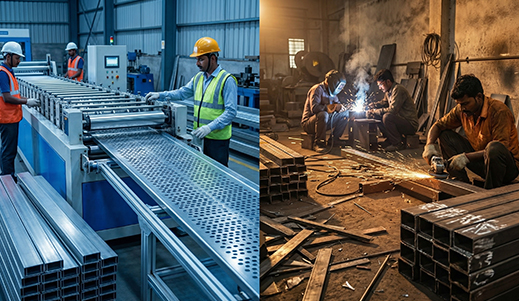
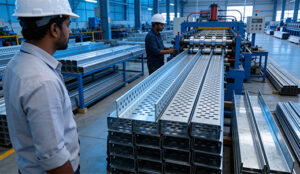
Roll forming is a continuous manufacturing process in which flat material is shaped into specific profiles using a series of rollers. Once the setup is complete, the process enables consistent, high-speed production with minimal variation.
It is particularly suitable for projects that require uniform components in large volumes.
What is Traditional Fabrication?
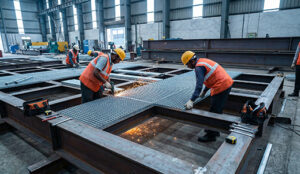
Traditional fabrication involves multiple steps such as cutting, bending, and assembling components. These processes are often manual or semi-automated, allowing for flexibility in design and customization.
This method is generally used for smaller projects or where unique specifications are required.
Production Speed
Roll forming allows for continuous production, significantly reducing manufacturing time once operations begin. In contrast, traditional fabrication involves multiple stages, which can slow down the overall process.
Faster production contributes directly to reduced project timelines and improved cost efficiency.
Labor Costs
Roll forming relies more on automation, reducing the need for extensive manual labor during production. Traditional fabrication, however, requires skilled workers at various stages, increasing labor costs.
Higher labor involvement can lead to increased operational expenses over time.
Material Efficiency
The roll forming process is highly precise, resulting in minimal material wastage. Traditional fabrication may involve cutting and adjustments that generate excess waste.
Efficient material usage can have a substantial impact on overall project costs, especially in large-scale applications.
Consistency and Quality
Roll forming ensures uniformity across all produced components, reducing the likelihood of defects or inconsistencies. Traditional fabrication may introduce variations due to manual handling.
Greater consistency minimizes rework and improves overall project efficiency.
Scalability
Roll forming is well-suited for large-scale projects requiring high volumes of identical components. As production volume increases, the cost per unit decreases.
Traditional fabrication is more practical for smaller quantities or customized requirements where flexibility is essential.
When is Traditional Fabrication More Suitable?
Despite its limitations in large-scale cost efficiency, traditional fabrication remains relevant in certain scenarios:
- Projects requiring customized designs
- Low-volume production requirements
- Situations where design changes are frequent
When is Roll Forming More Suitable?
Roll forming becomes the preferred choice in scenarios where efficiency, scale, and consistency are critical to project success.
It is particularly suitable when:
- Large volumes of identical components are required
- Projects demand high precision and uniformity
- Faster production timelines are essential
- Material optimization and reduced wastage are priorities
- Long-term cost efficiency is a key objective
At Aparna Rollform, advanced roll forming capabilities enable the delivery of high-quality, precision-engineered components that meet the demands of large-scale infrastructure projects. By combining automation with strict quality control, Aparna Rollform ensures consistency, reliability, and timely execution across every project.
Conclusion
The choice between roll forming and traditional fabrication depends largely on the scale and specific requirements of your project. For projects that demand speed, consistency, and large-volume production, roll forming offers a clear cost advantage, while traditional fabrication remains suitable for specialized or smaller-scale applications. With extensive experience in delivering precision-engineered solutions, Aparna Rollform supports clients in achieving cost efficiency, consistency, and timely execution across projects of varying scales. Selecting the right process, combined with the right partner, can significantly improve overall project performance and long-term value.
Frequently Asked Questions (FAQs)