Aparna Rollform

Types of cable trays that are useful for warehouses

Cable Trays steel warehouses

Warehouses are the bustling hubs of the industrial world, where goods are stored, processed, and dispatched. In this dynamic environment, the efficient management of cables and wires is crucial. Cable trays play a pivotal role in ensuring the safe and organized routing of cables, preventing damage, and minimizing the risk of accidents. This blog will delve into the various types of cable trays that are exceptionally useful for warehouses.

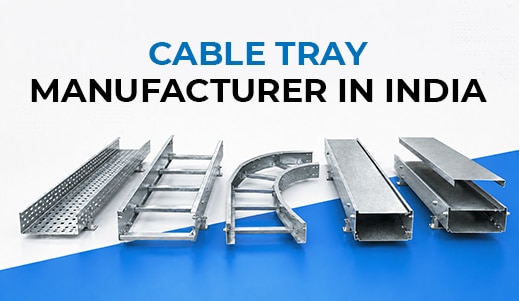
Ladder Cable Trays

Ladder cable trays are the workhorses of warehouse cable management. Their design resembles a ladder, with two longitudinal side rails connected by regularly spaced transverse rungs. These trays offer several advantages in a warehouse setting:

High Load Capacity: Ladder cable trays can support heavy loads, making them ideal for routing power cables and data cables in warehouses where substantial power requirements are common.

Excellent Ventilation: The open design of ladder trays allows for efficient heat dissipation, which is especially important in warehouses with equipment generating heat.

Easy Maintenance: Their accessibility simplifies cable installation, maintenance, and troubleshooting.

Wire Mesh Cable Trays

Wire mesh cable trays consist of interconnected wires, forming a grid-like structure. They offer unique benefits for warehouse applications:

Lightweight: Wire mesh trays are lighter than their solid counterparts, which simplifies installation.

Cost-Effective: They are often more budget-friendly while still providing adequate cable support.

Visibility: The open design allows for easy visibility and access to cables, simplifying cable management and maintenance.

Solid Bottom Cable Trays

In warehouses with sensitive equipment or where protection against external elements is crucial, solid bottom cable trays are the go-to choice. These trays have a solid metal or composite base with raised edges to contain the cables. Key features include:

Cable Protection: Solid bottom trays shield cables from dust, debris, and moisture, enhancing cable longevity.

Safety: These trays provide additional protection against accidental contact with live wires, an essential factor in warehouses with high foot traffic.

Clean Aesthetics: Solid bottom trays maintain a tidy appearance by concealing cables from view.

Trough Cable Trays

Trough cable trays feature a U-shaped design, making them a suitable choice for warehouses requiring comprehensive cable support and management. They offer:

High Cable Capacity: Solid bottom trays shield cables from dust, debris, and moisture, enhancing cable longevity.

Cable Separation: These trays provide additional protection against accidental contact with live wires, an essential factor in warehouses with high foot traffic.

Durability: Solid bottom trays maintain a tidy appearance by concealing cables from view.

Perforated Cable Trays

Perforated cable trays are similar to ladder trays but have a solid base with strategically placed perforations. These trays are beneficial for warehouses due to:

Excellent Cable Support: The combination of solid support and perforations provides sturdy cable management while allowing for ventilation and drainage.

Versatility:  Perforated trays can accommodate various cable types, making them suitable for warehouses with diverse cabling requirements.

Resistance to Corrosion:  In warehouses with challenging environmental conditions, perforated trays made from corrosion-resistant materials are available.

Channel Cable Trays

Channel cable trays are enclosed structures with a single central channel. They offer distinct advantages for specific warehouse scenarios:

Cable Protection:  These trays protect cables from physical damage, dust, and moisture, making them suitable for warehouses where environmental factors pose a risk to cable integrity.

Compact Design:  Channel trays are space-efficient, making them suitable for narrow or constrained warehouse layouts.

Security: Cables are less exposed to tampering or unauthorized access in channel trays.

Conclusion

Cable trays are indispensable components for maintaining the integrity and safety of cables in warehouse environments. By selecting the appropriate cable trays, warehouses can ensure efficient cable management, reduce maintenance costs, and enhance safety, ultimately contributing to the smooth operation of the entire facility.

If you would like to set up a cable management system for your business, please visit Aparna RollForm
 

Related Blogs

false ceiling

How Support Systems and Accessories Ensure Stability in Cable Installations

How Support Systems and Accessories Ensure Stability in Cable Installations In modern infrastructure and industrial projects, cable management is about more than just organizing cables. A well-designed cable installation system must ensure stability, safety, and long-term performance under varying operational conditions. This is where support systems and accessories play a critical role. While cable trays and raceways form the primary structure, accessories and support components are essential for maintaining alignment, load distribution, and installation reliability. From industrial facilities to commercial buildings, these components help create a secure and efficient cable management system. Understanding Support Systems and Accessories Support systems and accessories are supplementary components used to secure, stabilize, and connect cable management systems. These include: Support brackets Hangers and clamps Mounting channels Couplers and connectors Fasteners and joining accessories Adjustable support systems Together, these components ensure that cable installations remain structurally stable and function efficiently over time. Why Stability Matters in Cable Installations Improperly supported cable systems can lead to several operational issues, including: Misalignment during installation Excessive load stress Cable sagging or displacement Increased maintenance requirements Safety risks in industrial environments A properly designed support system minimizes these risks and improves the overall reliability of the installation. How Support Systems Improve Installation Stability Uniform Load Distribution Support systems help distribute the weight of cables evenly across the structure. This prevents excessive stress on specific sections and improves the durability of the entire installation. Structural Strength and Alignment Mounting channels, brackets, and support accessories maintain alignment throughout the installation process. This ensures a clean and organized system layout while improving structural integrity. Reduced Vibrations and Movement In industrial environments, vibrations from machinery and operational activities can impact cable systems. Proper support components help reduce movement and maintain system stability. Flexibility for Complex Installations Modern infrastructure projects often involve challenging layouts and routing requirements. Adjustable support systems allow easier customization while maintaining stability and installation accuracy. Importance of Accessories in Cable Management Systems Accessories are often overlooked, but they play an essential role in ensuring seamless integration and performance. Couplers and Connectors These components securely join sections together, maintaining continuity and structural consistency throughout the system. Fasteners and Clamps Fasteners ensure secure installation and prevent displacement during operation. Hangers and Brackets These provide vertical and horizontal support while improving load management. Together, these accessories contribute to efficient installation and long-term reliability. Benefits of Using High-Quality Support Systems Improved Safety Properly supported cable systems reduce the risk of failures and accidents. Easier Installation Pre-engineered accessories simplify installation and reduce on-site adjustments. Better Durability High-quality support systems improve the lifespan of cable management installations. Reduced Maintenance Stable installations experience fewer operational issues, reducing maintenance requirements over time. Applications Across Industries Support systems and accessories are widely used in: Commercial buildings Industrial manufacturing units Power plants Data centers Infrastructure and transportation projects These components are essential wherever organized and secure cable management is required. Conclusion Support systems and accessories are a critical part of any cable installation. They provide structural stability, improve safety, and ensure efficient load management across projects of all sizes. By combining precision-engineered cable management systems with reliable support components, Aparna Rollform helps clients achieve stable, efficient, and long-lasting installations. With a focus on quality, consistency, and project reliability, the company continues to support modern infrastructure requirements with dependable solutions. Frequently Asked Questions (FAQs) Why are support systems important in cable installations? Support systems help maintain structural stability, distribute loads evenly, and ensure safe and organized cable routing throughout the installation. What accessories are commonly used in cable management systems? Common accessories include brackets, couplers, fasteners, clamps, mounting channels, and hangers used for securing and connecting cable management systems. How do support systems improve installation efficiency? Pre-engineered support systems reduce on-site adjustments, simplify installation, and improve alignment, helping projects stay on schedule. Support systems help maintain structural stability, distribute loads evenly, and ensure safe and organized cable routing throughout the installation. Common accessories include brackets, couplers, fasteners, clamps, mounting channels, and hangers used for securing and connecting cable management systems. Pre-engineered support systems reduce on-site adjustments, simplify installation, and improve alignment, helping projects stay on schedule. Related Blogs

Read More »
pre engineered sections

Top Advantages of Using Pre-Engineered Sections in Large-Scale Projects

Top Advantages of Using Pre-Engineered Sections in Large-Scale Projects If you’ve ever been part of a large construction project, you already know how challenging it can be to keep everything on track. Timelines get tight, costs start increasing, and even small delays can create a ripple effect across the entire project. This is exactly why many developers and contractors are moving towards pre-engineered sections. Instead of building everything from scratch on-site, these components are designed and manufactured in advance, making the entire process faster, smoother, and far more predictable. What Are Pre-Engineered Sections? In simple terms, pre-engineered sections are ready-to-install components that are manufactured off-site based on project requirements. They are designed with precision and delivered to the site in a finished or semi-finished form, reducing the need for on-site fabrication. Key Components of Pre-Engineered Sections Pre-engineered sections typically include: Structural profiles designed for load-bearing applications Cable management systems such as trays and supports Mounting systems and brackets for installation Fasteners and accessories required for assembly Surface finishes for durability and environmental protection These components are designed to work together seamlessly, ensuring efficient installation and long-term performance. Why Are They Becoming So Popular? The shift towards pre-engineered sections isn’t just a trend—it’s a practical response to real project challenges. Quality and Durability Since pre-engineered sections are manufactured in controlled environments, they maintain consistent quality standards. The use of high-grade materials and precision processes ensures durability and long-term performance, even in demanding conditions. Sustainability and Eco-Friendly Design Pre-engineered sections support sustainable construction practices. Materials used in these systems are often recyclable, reducing environmental impact. Optimized production processes also minimize waste, making them a more eco-friendly choice for modern infrastructure projects. Faster Execution on Site One of the biggest advantages is speed. Since the components are already manufactured and ready, installation becomes much quicker. There’s no need to spend time cutting, shaping, or adjusting materials on-site. This helps teams move faster and keeps the project timeline under control. Better Consistency and Fit When components are produced in a controlled environment, the chances of variation are minimal. Everything fits the way it’s supposed to, which reduces errors during installation. This also means less rework and fewer delays. For large projects, this kind of consistency makes a huge difference. More Control Over Costs Cost overruns are a common concern in big projects. Pre-engineered sections help control costs by reducing wastage, lowering labor requirements, and speeding up execution. While planning might take a bit more effort upfront, it pays off in the long run by avoiding unexpected expenses. Reduced Material Waste On-site work often leads to excess cutting and adjustments, which increases material waste. With pre-engineered sections, everything is designed with precision, so material usage is optimized from the beginning. This not only saves cost but also supports more efficient resource utilization. Safer Work Environment Less on-site fabrication means fewer high-risk activities like cutting or heavy manual work. This helps create a safer working environment for teams and reduces the chances of accidents. Ideal for Large-Scale Requirements When a project involves multiple buildings or large infrastructure, the need for uniform components becomes critical. Pre-engineered sections can be produced in bulk while maintaining the same quality and specifications. This makes them highly suitable for projects that require consistency at scale. Easier Installation Process Since everything is pre-designed and manufactured, installation becomes more straightforward. Teams can focus on assembling rather than creating components, which improves productivity on-site. Better Planning and Coordination With pre-engineered sections, most of the decisions are made during the planning stage. This allows for better coordination between teams and reduces last-minute changes during execution. As a result, projects run more smoothly and efficiently. Conclusion Large-scale projects come with complex challenges, but the right approach can significantly improve outcomes. Pre-engineered sections simplify execution, enhance consistency, and help control costs, making them a practical solution for modern construction needs. With a strong focus on precision manufacturing, quality materials, and efficient delivery, Aparna Rollform supports clients in implementing pre-engineered solutions that improve project efficiency and reliability. As projects continue to grow in scale and complexity, adopting such solutions is becoming essential for achieving timely and cost-effective project completion. Frequently Asked Questions (FAQs) What are the main benefits of using pre-engineered sections? Pre-engineered sections offer faster installation, consistent quality, reduced material waste, and better cost control, making them ideal for large-scale projects. Are pre-engineered sections suitable for all types of projects? They are most suitable for large-scale and repetitive applications. However, they can also be used in smaller projects where precision, efficiency, and faster execution are required. How do pre-engineered sections improve project timelines? Since components are manufactured in advance and delivered ready for installation, on-site work is significantly reduced. This speeds up execution and helps projects stay on schedule. Pre-engineered sections offer faster installation, consistent quality, reduced material waste, and better cost control, making them ideal for large-scale projects. They are most suitable for large-scale and repetitive applications. However, they can also be used in smaller projects where precision, efficiency, and faster execution are required. Since components are manufactured in advance and delivered ready for installation, on-site work is significantly reduced. This speeds up execution and helps projects stay on schedule. Related Blogs

Read More »
roll forming in project efficiency

From Concept to Completion: The Role of Roll Forming in Project Efficiency

From Concept to Completion: The Role of Roll Forming in Project Efficiency In today’s construction and infrastructure landscape, project efficiency is no longer optional—it is essential. With tighter deadlines, rising costs, and increasing expectations for quality, every stage of a project must be optimized. From initial design to final execution, the processes used behind the scenes play a critical role in determining overall success. One such process that has gained significant importance is roll forming. By enabling faster production, consistent output, and better resource management, roll forming supports projects from concept to completion in a highly efficient manner. Understanding Project Efficiency in Modern Construction Project efficiency goes beyond completing work on time. It involves: Minimizing delays Reducing material wastage Ensuring consistent quality Optimizing labor and resources Achieving all of this requires selecting the right manufacturing methods early in the project lifecycle. The Role of Roll Forming at the Design Stage Efficiency begins at the design stage, where planning and precision lay the foundation for successful execution. Roll forming integrates seamlessly into this phase by enabling accurate and repeatable profile development. Computer Simulation and Optimization Advanced tools such as CAD/CAM software allow engineers to simulate the roll forming process before production begins. This helps in identifying potential design challenges, optimizing dimensions, and ensuring that the final output meets exact specifications. Pattern Design Roll forming requires carefully planned profile designs. By standardizing patterns early, manufacturers can ensure consistency throughout production and reduce the need for changes during execution. Material Selection Choosing the right material at the design stage is critical. Roll forming supports efficient material utilization by aligning design specifications with production capabilities, reducing waste, and improving performance. Improved Coordination With clearly defined designs and simulations, teams across design, manufacturing, and execution phases can work in alignment, reducing errors and delays. This results in: Improved accuracy in specifications Reduced need for design modifications Better coordination between teams Enhancing Production Efficiency Once production begins, roll forming offers a clear advantage through its continuous and streamlined process. Unlike traditional methods that involve multiple steps, roll forming produces components in a single, uninterrupted flow. Faster Manufacturing Cycles Roll forming enables continuous production, allowing components to be manufactured quickly once the setup is complete. This significantly reduces production time and helps projects stay on schedule, especially in large-scale applications. Consistent Quality Across All Components Since roll forming is a highly controlled and automated process, it ensures uniformity in every component produced. This consistency reduces variations, improves reliability, and minimizes the chances of defects. Reduced Dependency on Manual Processes Automation in roll forming reduces reliance on manual labor for repetitive tasks. This not only improves efficiency but also lowers the risk of human error, ensuring smoother production workflows. Supporting Smooth Project Execution During the execution phase, consistency and reliability are critical. Delays or inconsistencies in component supply can disrupt the entire project timeline. Roll forming ensures that components are produced with uniformity, making installation and integration more efficient. This leads to: Faster on-site progress Reduced rework and adjustments Improved coordination across teams Minimizing Material Waste and Cost Overruns Material management is a major factor in project efficiency. Roll forming is designed to use material effectively, minimizing waste during production. Lower material wastage contributes directly to cost savings and supports better budget control throughout the project. In large-scale projects, even small improvements in material efficiency can result in significant financial benefits. Enabling Scalability for Large Projects Modern infrastructure projects often require large volumes of identical components. Roll forming is well-suited for such requirements due to its ability to maintain consistency at scale. As production volume increases, efficiency improves, and the cost per unit decreases. This makes roll forming an ideal choice for projects with high-volume demands. Reducing Rework and Improving Quality Control One of the hidden costs in any project is rework. Variations in components can lead to adjustments, delays, and additional expenses. Roll forming minimizes these risks by delivering consistent and precise output. This improves overall quality control and ensures smoother project execution. Conclusion Efficiency in construction is achieved through a combination of planning, execution, and the right manufacturing processes. Roll forming plays a vital role across all stages of a project—from concept and design to production and final implementation—by delivering speed, consistency, and cost control. With its ability to support large-scale requirements while maintaining precision, it has become an essential solution in modern infrastructure projects. With a strong focus on quality, reliability, and timely delivery, Aparna Rollform supports clients in achieving higher project efficiency and better overall outcomes. By integrating the right processes with the right expertise, businesses can reduce delays, optimize costs, and maintain consistent standards throughout the project lifecycle. Frequently Asked Questions (FAQs) How does roll forming improve project completion speed? Roll forming improves project completion speed by enabling continuous production and reducing the number of manufacturing steps. Once the setup is complete, components can be produced quickly and consistently, ensuring timely availability for installation and minimizing delays. Is roll forming suitable for small-scale projects? Roll forming is generally more efficient for large-scale projects with repetitive requirements. However, it can still be suitable for small-scale projects if there is a need for high precision, consistency, and quality in the components being produced. Can roll forming help stay within a project’s budget? Yes, roll forming helps in maintaining budget control by reducing material wastage, lowering labor costs through automation, and minimizing rework. These factors collectively contribute to better cost management throughout the project lifecycle Roll forming improves project completion speed by enabling continuous production and reducing the number of manufacturing steps. Once the setup is complete, components can be produced quickly and consistently, ensuring timely availability for installation and minimizing delays. Roll forming is generally more efficient for large-scale projects with repetitive requirements. However, it can still be suitable for small-scale projects if there is a need for high precision, consistency, and quality in the components being produced. Yes, roll forming helps in maintaining budget control by reducing material wastage, lowering labor costs through

Read More »